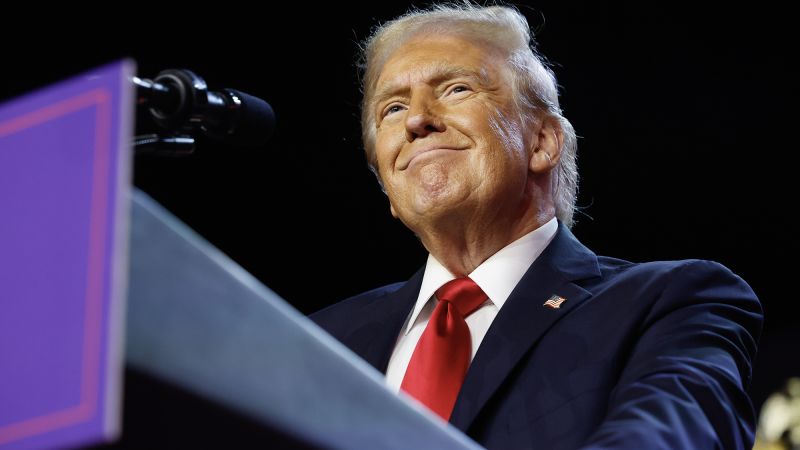
Trump promised massive tariffs on imports but how he’ll pull it off is still being figured out
CNN
Just days after winning a comeback election, President-elect Donald Trump is evaluating how his campaign promises might translate into policy. When it comes to rolling out the broad-based tariffs that he pledged on the campaign trail, the strategy is not yet formed, multiple sources familiar with the matter told CNN.
Just days after winning a comeback election, President-elect Donald Trump is evaluating how his campaign promises might translate into policy. When it comes to rolling out the broad-based tariffs that he pledged on the campaign trail, the strategy is not yet formed, multiple sources familiar with the matter told CNN. “The vision is there, but the game plan is not,” said one source close to the discussions, noting major decisions about how to pursue these strategies – and the personnel executing them – have yet to be made. Economic experts say the cost of the tariffs is expected to be passed along to consumers rather than being borne by companies who are producing goods broad. As a candidate, Trump pledged to slap 60% tariffs on all goods coming in from China and 10% tariffs on goods imported from all other countries. While aides say those pledges weren’t campaign bluster, there are still questions about how to pursue them, through what legal authorities and when. Among those advising Trump on economic issues before he makes critical appointments, a clear strategy has emerged: Link the increased China tariffs to tax reform negotiations expected to reach a head in 2025. “The way that President Trump looks at tariffs are not in isolation. They are a fundamental and core part of his broader economic strategy, which also includes tax cuts, deregulation, energy diversity,” says Kelly Ann Shaw, a former Trump official who is now a partner at law firm Hogan Lovells. Much of the landmark legislation from Trump’s first term – the 2017 Tax Cut and Jobs Act – is set to expire at the end of next year, with congressional Republicans already working on how to extend or make it permanent. Trump’s economic advisers – and the president himself – view the forthcoming tariff revenue as a way to offset that cost.


Friday featured yet another drop in the drip-drip-drip of new information from the Jeffrey Epstein files. This time: new pictures released by House Democrats that feature Donald Trump and other powerful people like Bill Clinton, Steve Bannon and Richard Branson, culled from tens of thousands of photos from Epstein’s estate.

Mubashir had just stepped outside into the snowy Minneapolis winter weather to take his lunch break when he says he saw a masked federal officer running toward him “at full speed.”

The death of a 32-year-old man after riding a high-speed roller coaster at the Universal Epic Universe theme park was accidental, and an investigation has been closed, according to a Florida sheriff’s office report released this week.

Bruna Ferreira had rushed out of her Massachusetts home, shoelaces untied, and was driving to pick up her 11-year-old son from school when she was approached by unmarked vehicles and a “swarm of people.”

The US special forces veteran who spirited Nobel laureate María Corina Machado out of Venezuela has begged her not to return to the country, after a perilous rescue mission that lasted nearly 16 hours and was carried out largely in the middle of the night through rough waters.

House Republicans unveiled a narrow health care package on Friday that does not extend soon-to-expire enhanced Affordable Care Act subsidies — the latest sign that Congress is unlikely to avert skyrocketing insurance premiums for millions of Americans in the new year.

The Department of Labor held a Christian prayer service for its employees this week, TKTKTK this is highly unusual.

The Justice Department sued Fulton County, Georgia, on Friday, seeking records related to the 2020 election as efforts continue to prove President Donald Trump’s false claims that the election was stolen from him.

Adm. Alvin Holsey, the commander of US Southern Command who reportedly clashed with Defense Secretary Pete Hegseth over the legality of the US military strikes in the Caribbean, officially retired on Friday in a ceremony in Floria where he handed the reigns of the command to his deputy.

The nation’s top historic preservation group said Friday it was suing the Trump administration to block construction of President Trump’s planned 90,000 square-foot ballroom until review boards weigh in on the massive project.

The 1980 US Olympic men’s ice hockey team defied nearly insurmountable odds to defeat the Soviet Union, the world’s largest hockey superpower, propelling them to win a gold medal and the nation’s adulation.

Venezuelan opposition leader María Corina Machado said Friday that she is focused on an orderly transition of power in her country should President Nicolás Maduro leave power, and is confident that Venezuela’s police and armed forces would not oppose such a transition.

The Venezuelan government said the US administration has unilaterally suspended deportation flights from the United States that were due to land on Friday.