The next steps in Luigi Mangione’s case and why his most serious charge is only second-degree murder
CNN
The most serious charge against healthcare CEO killing suspect Luigi Mangione is murder in the second-degree in New York, but the murder charge could be upgraded if prosecutors find evidence to prove he had an intent to commit terrorism by targeting other executives.
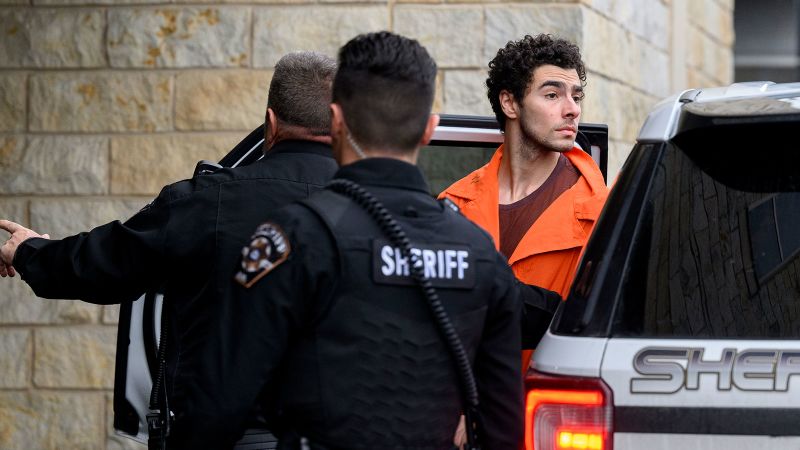
The most serious charge against the suspect accused of killing the UnitedHealthcare CEO in broad daylight last week on a Manhattan sidewalk is murder in the second-degree, but that charge could be upgraded if prosecutors find evidence to prove he had an intent to commit terrorism by targeting other executives, according to legal analysts. Investigators say they have mounting evidence against Luigi Mangione, 26, connecting him to the assassination of Brian Thompson on December 4. The 3D-printed gun and fake ID found on him when he was arrested in Pennsylvania on Monday matches three shell casings found at the crime scene, and his fingerprints match those investigators found on items near the scene, according to New York Police Department Commissioner Jessica Tisch. Mangione was also carrying a document, which has been described as a “manifesto” that did not include specific threats but indicated “ill will towards corporate America,” said NYPD Chief of Detectives Joseph Kenny. Mangione was denied bail on Tuesday and is fighting his extradition to New York, where he faces five charges, including second-degree murder, in Thompson’s killing. He also faces gun charges in Pennsylvania related to the firearm police say they found on him when he was arrested. Under New York state law, a first-degree murder charge only applies to a narrow list of aggravating circumstances — for example, when the victim is a judge, police officer, first responder, or when the killing involves a murder-for-hire or intent to commit terrorism, several legal experts told CNN. In Mangione’s case, he could be charged with first-degree murder if the investigation uncovers evidence showing he had a plan to commit terrorism, such as plotting the killing of other health insurance executives, said David Shapiro, a lecturer at the John Jay College of Criminal Justice. If convicted of second-degree murder, Mangione faces at least 15 years to life in prison, while a first-degree murder charge carries a minimum of 20 years to life in prison.


The Department of Labor held a Christian prayer service for its employees this week, TKTKTK this is highly unusual.

The Justice Department sued Fulton County, Georgia, on Friday, seeking records related to the 2020 election as efforts continue to prove President Donald Trump’s false claims that the election was stolen from him.

Adm. Alvin Holsey, the commander of US Southern Command who reportedly clashed with Defense Secretary Pete Hegseth over the legality of the US military strikes in the Caribbean, officially retired on Friday in a ceremony in Floria where he handed the reigns of the command to his deputy.

The nation’s top historic preservation group said Friday it was suing the Trump administration to block construction of President Trump’s planned 90,000 square-foot ballroom until review boards weigh in on the massive project.

The 1980 US Olympic men’s ice hockey team defied nearly insurmountable odds to defeat the Soviet Union, the world’s largest hockey superpower, propelling them to win a gold medal and the nation’s adulation.

Venezuelan opposition leader María Corina Machado said Friday that she is focused on an orderly transition of power in her country should President Nicolás Maduro leave power, and is confident that Venezuela’s police and armed forces would not oppose such a transition.

The Venezuelan government said the US administration has unilaterally suspended deportation flights from the United States that were due to land on Friday.

Democrats on the House Oversight Committee have released photos from Jeffrey Epstein’s estate Friday showing the many powerful figures in the late sex trafficker’s orbit, including President Donald Trump, former President Bill Clinton, Steve Bannon, Bill Gates, Richard Branson and others.

A federal judge has temporarily blocked the Trump administration from once again detaining Kilmar Abrego Garcia, hours after the judge ordered him to be released from an immigration detention facility.

The murder trial of Brian Walshe, who is accused of killing and dismembering his wife in 2023, continues. Follow for live news updates

The Justice Department’s mortgage fraud investigation into New York Attorney General Letitia James is on life support after a grand jury, for the second time, rejected an indictment that would have revived charges against her.

A little-known civil rights office in the Department of Education that helps resolve complaints from students across the country about discrimination and accommodating disabilities has been gutted by the Trump administration and is now facing a ballooning backlog, a workforce that’s in flux and an unclear mandate.

The Indiana state Senate’s rejection of President Donald Trump’s redistricting push is one of the most significant GOP rebukes of Trump to date, and at a particularly inauspicious time for him.