Supreme Court to debate whether cities can punish people who are homeless
CNN
When Helen Cruz pitched her tent in a city park a few years ago and made it her home, she chose the location for one reason: She wanted to be close to the houses she cleans for a living but could never afford for herself.
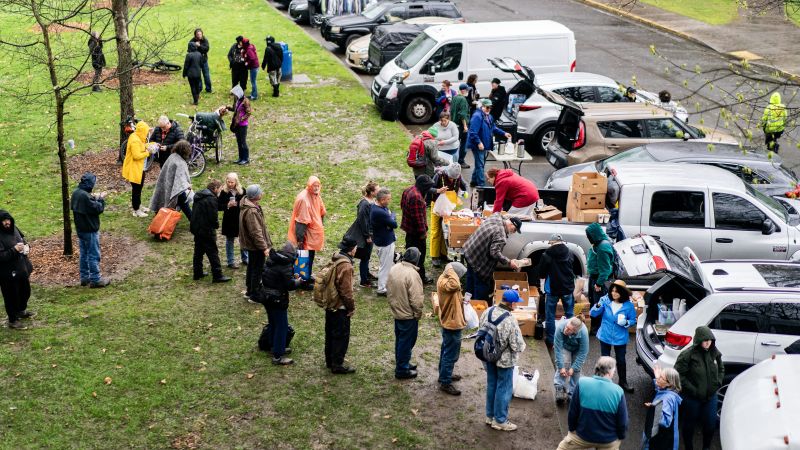
When Helen Cruz pitched her tent in a city park a few years ago and made it her home, she chose the location for one reason: She wanted to be close to the houses she cleans for a living but could never afford for herself. “People see the irony of it,” said Cruz, 49. “I never looked at it like that.” What Cruz didn’t realize then was that living in a park in Grants Pass, Oregon, would place her in the middle of a national debate that will reach the Supreme Court on Monday about whether cities can respond to a spike in homelessness by punishing homeless people. In the most significant appeal involving unhoused Americans to reach the high court in decades, the justices will hear arguments Monday on whether ticketing people who live on the streets is “cruel and unusual” and violates the Eighth Amendment. The case is being watched closely by city and state officials who are uncertain how to respond to a surge in homelessness and encampments that have cropped up under bridges and in city parks across the nation. It’s also being followed by people who live in those encampments and are alarmed by efforts to criminalize the population rather than build shelters and affordable housing. “Nobody wants to be out here,” said Cruz, who has since moved into a church where she also serves as a caretaker. “We know the parks are for family and children. The thing is, we have no place to go. There’s no housing.”


Former Republican Sen. Ben Sasse announced Tuesday that he’s been diagnosed with “metastasized, stage 4 pancreatic cancer, and am gonna die.”

CNN’s 5 Things AM brings you the news you need to know every morning.

Political opposites are closing 2025 as they did 2024: on each side of America’s Donald Trump divide. But CNN’s “All Over the Map” survey did provide several interesting takeaways. Some may be instructive about the midterm election climate, at least at this beginning stage.

A 2-year-old child is among at least five people who were killed when a Mexican Navy plane carrying medical patients crashed into the waters of Galveston Bay in Texas on Monday afternoon, US Coast Guard officials say.

The Trump administration is suing the local government of Washington, DC, over its gun laws, alleging that restrictions on certain semiautomatic weapons run afoul of Second Amendment rights.

Vince Zampella, one of the creators behind best-selling video games such as “Call of Duty,” has died. He was 55.

President Donald Trump said Monday the US remains in active pursuit of an oil tanker off the coast of Venezuela, more than 24 hours after the chase began, while repeating his threats against Venezuelan President Nicolás Maduro.

Vice President JD Vance has never looked more like the presumptive 2028 Republican presidential nominee.

A man is facing murder, weapons, and arson charges after authorities say he killed another man with an arrow, then barricaded himself in his home, where several fires were set.

An apparently frustrated federal judge pressed the Trump administration Monday to share what it was going to do next in the fast-moving saga over Kilmar Abrego Garcia days after she found he was being unlawfully held in immigration custody.

The Justice Department’s release of thousands of documents and pictures related to investigations into Jeffrey Epstein on Friday was highly anticipated and provided a glimpse into the life of the late sex offender and his associations with some of the richest and most powerful people in the world.

Jeffrey Epstein survivors are slamming the Justice Department’s partial release of the Epstein files that began last Friday, contending that contrary to what is mandated by law, the department’s disclosures so far have been incomplete and improperly redacted — and challenging for the survivors to navigate as they search for information about their own cases.

President Donald Trump is expected to make an announcement about shipbuilding alongside his Pentagon chief and Navy secretary on Monday, according to a person familiar with the plans.