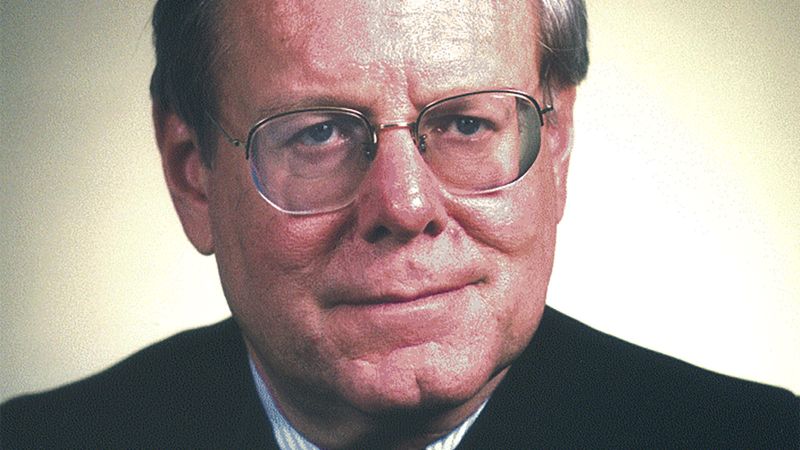
Reagan-appointed judge uses footnote to ding the Supreme Court’s Trump immunity ruling
CNN
A federal trial court judge in North Carolina used a highly unusual footnote in a ruling Friday to take a swipe at the Supreme Court, accusing the conservative majority of attempting to “redesign” the presidency when it granted sweeping immunity to Donald Trump.
A federal trial court judge in North Carolina used a highly unusual footnote in a ruling Friday to take a swipe at the Supreme Court, accusing the conservative majority of attempting to “redesign” the presidency when it granted sweeping immunity to Donald Trump. In a lengthy footnote at the end of his opinion, US District Judge William G. Young, appointed to the bench by President Ronald Reagan in 1985, appeared to praise the high court’s rulings this year affirming the use of jury trials in some situations. But then Young offered a caveat, citing the court’s major decision in the Trump immunity case delivered along 6-3 conservative-liberal lines. Young described the outcome of that case as a “six-member majority, eschewing historical analysis,” that “sought fundamentally to redesign the relationship between the sovereign people and the first citizen of the Republic.” The Supreme Court on July 1 ruled that Trump may claim immunity from criminal prosecution for some of the official actions he took to overturn the 2020 election. Special counsel Jack Smith’s case against Trump is now pending in a US District Court in Washington, DC, and the next hearing won’t be until September. The court’s decision has drawn sharp criticism from the left, including President Joe Biden and many Democrats on Capitol Hill. Unlike with other historic cases entwined with presidential politics, the court failed to find any compromise between the justices nominated by Republican presidents and those picked by Democrats.


Friday featured yet another drop in the drip-drip-drip of new information from the Jeffrey Epstein files. This time: new pictures released by House Democrats that feature Donald Trump and other powerful people like Bill Clinton, Steve Bannon and Richard Branson, culled from tens of thousands of photos from Epstein’s estate.

Mubashir had just stepped outside into the snowy Minneapolis winter weather to take his lunch break when he says he saw a masked federal officer running toward him “at full speed.”

The death of a 32-year-old man after riding a high-speed roller coaster at the Universal Epic Universe theme park was accidental, and an investigation has been closed, according to a Florida sheriff’s office report released this week.

Bruna Ferreira had rushed out of her Massachusetts home, shoelaces untied, and was driving to pick up her 11-year-old son from school when she was approached by unmarked vehicles and a “swarm of people.”

The US special forces veteran who spirited Nobel laureate María Corina Machado out of Venezuela has begged her not to return to the country, after a perilous rescue mission that lasted nearly 16 hours and was carried out largely in the middle of the night through rough waters.

House Republicans unveiled a narrow health care package on Friday that does not extend soon-to-expire enhanced Affordable Care Act subsidies — the latest sign that Congress is unlikely to avert skyrocketing insurance premiums for millions of Americans in the new year.

The Department of Labor held a Christian prayer service for its employees this week, TKTKTK this is highly unusual.

The Justice Department sued Fulton County, Georgia, on Friday, seeking records related to the 2020 election as efforts continue to prove President Donald Trump’s false claims that the election was stolen from him.

Adm. Alvin Holsey, the commander of US Southern Command who reportedly clashed with Defense Secretary Pete Hegseth over the legality of the US military strikes in the Caribbean, officially retired on Friday in a ceremony in Floria where he handed the reigns of the command to his deputy.

The nation’s top historic preservation group said Friday it was suing the Trump administration to block construction of President Trump’s planned 90,000 square-foot ballroom until review boards weigh in on the massive project.

The 1980 US Olympic men’s ice hockey team defied nearly insurmountable odds to defeat the Soviet Union, the world’s largest hockey superpower, propelling them to win a gold medal and the nation’s adulation.

Venezuelan opposition leader María Corina Machado said Friday that she is focused on an orderly transition of power in her country should President Nicolás Maduro leave power, and is confident that Venezuela’s police and armed forces would not oppose such a transition.

The Venezuelan government said the US administration has unilaterally suspended deportation flights from the United States that were due to land on Friday.