Pahalgam killings spark fresh wave of polarisation and communal politics in Bengal
The Hindu
Return of coffins from Kashmir to Bengal sparks political and religious tensions, deepening communal divides ahead of elections.
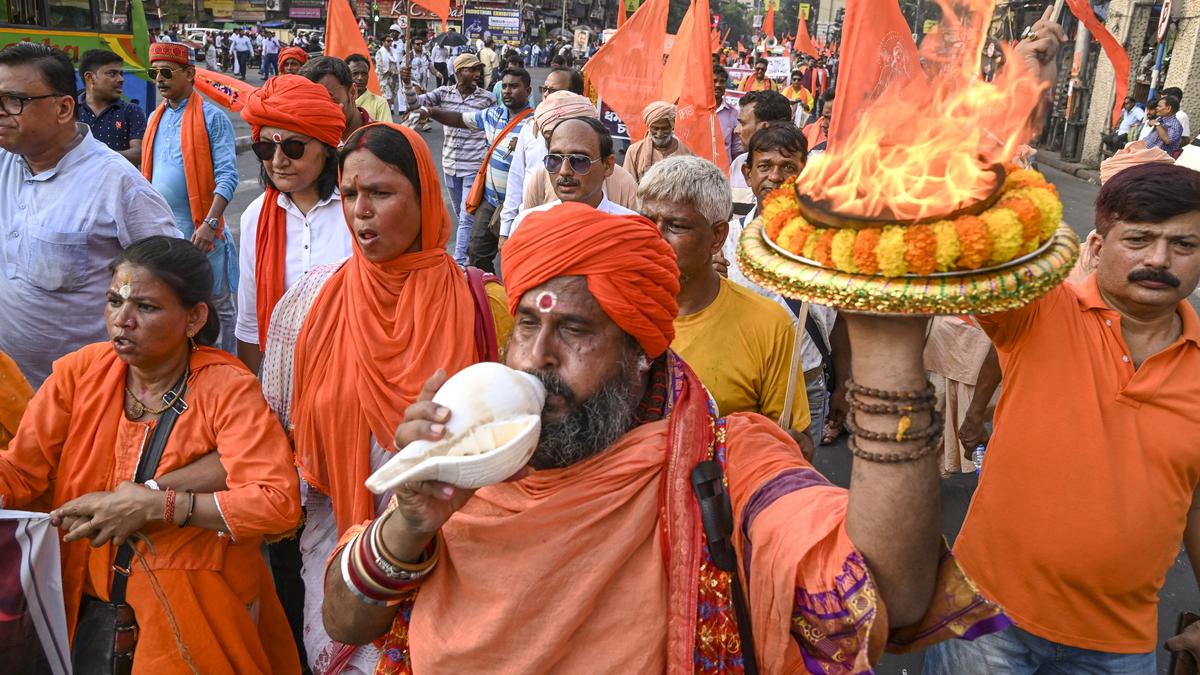
The return of four coffins from Kashmir to Bengal — three deceased of the Pahalgam terror attack and one soldier killed in Udhampur — has not only stirred grief, but also ignited a volatile mix of religion, politics and emotion — deepening polarisation and marking a turning point in the state's identity politics.
With the 2026 assembly elections less than a year away, the killings have swiftly taken on a political charge, threatening to become the emotional nucleus around which competing narratives and electoral strategies will revolve.
The brutal killing of tourists Bitan Adhikari, Samir Guha and Manish Ranjan Mishra in Kashmir, has sent shockwaves through the state.
The chilling nature of these targeted killings has thrust the politics of religious identity into the spotlight, with the faith of the victims now becoming a potent political tool.
As parties scramble to frame the narrative through religion, nationalism and victimhood, the deaths have transformed into a new battleground in Bengal’s fierce political contest.
The fourth coffin — of soldier Jhontu Ali Sheikh from Nadia killed in a separate ambush in Udhampur — has further complicated the emotional and political discourse, as martyrdom and terror are increasingly viewed through communal prisms.
The invocation of religious identity following the attacks has signalled a shift in Bengal’s political choreography — one that observers say is aligned with the BJP’s "ideological thrust" and the TMC's "appeasement politics".


Roads in Coimbatore city appear to be less friendly for pedestrians as an RTI reply from police showed that pedestrians accounted for 37% of road traffic accident fatalities in the first 10 months this year.

Virat Singh expresses his determination to impress and secure a spot in the IPL after strong performances in the Syed Mushtaq Ali Trophy.

Tamil Nadu accuses ED of illegal actions and misrepresentation in a writ petition concerning sand mining offences.

China asserts its sovereignty over Taiwan amid U.S. security strategy updates, warning against external interference in the region.

Virasat Art from Kolkata recently showcased rare engravings, posters and paintings from the Colonial-era in Bengaluru

D.K. Shivakumar emphasizes Bengaluru and Hyderabad's joint role in driving India's tech and economic leadership at the Telangana Summit.

Farmers’ organisations in Haryana burn copies of twin Bills

Record low temperatures hit Araku Valley and surrounding areas, dropping to 3°C amid an intense cold wave.

Ernakulam votes today in local body elections, with over 26 lakh voters choosing from 7,347 candidates across 111 local bodies.

Thirupparankundram was peaceful, and the outsiders were trying to disrupt peace there for political reasons; they did not know about the significance of the land, said DMK organising secretary R.S. Bharathi.

TOMCOM signs two MoUs at the Global Summit to enhance overseas job opportunities for Telangana's skilled workforce.

Tripura's Manisankar Murasingh shines in Super Over victory against Karnataka in a thrilling Syed Mushtaq Ali Trophy clash.

Four IAS officers appointed as special roll observers in Tamil Nadu to oversee electoral roll revision activities for 2026.