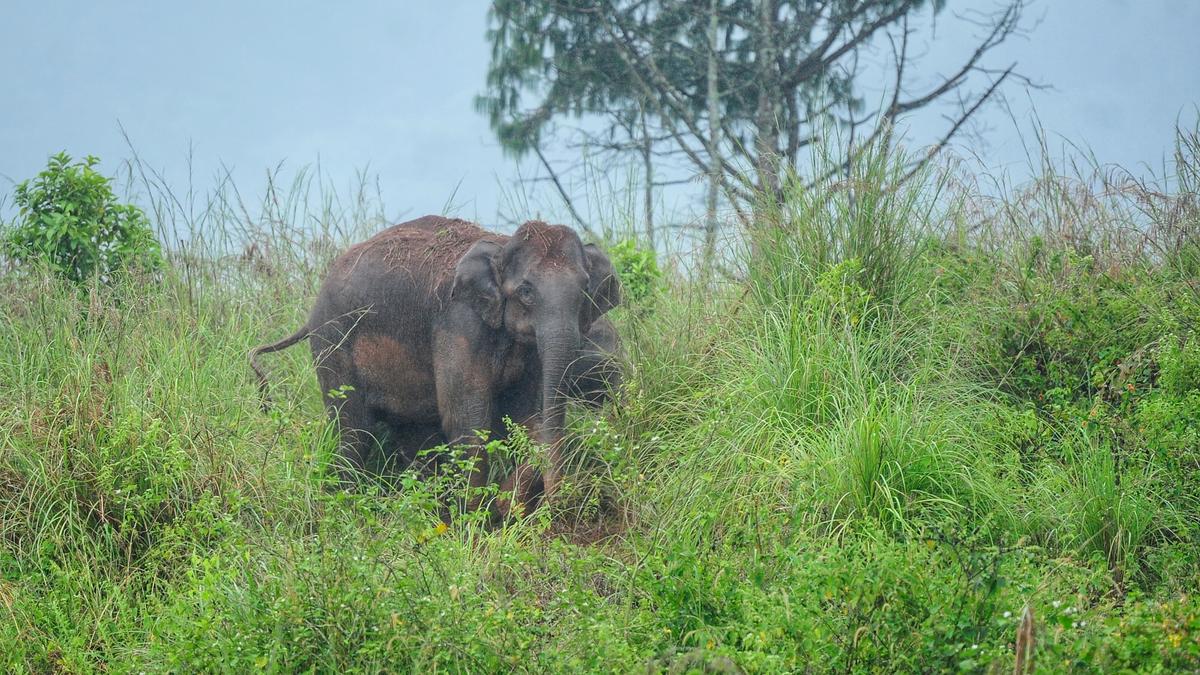
Kerala Assembly: Government seeks urgent amendments to Wildlife (Protection) Act to control wildlife populations
The Hindu
Kerala's Left Democratic Front criticizes Centre over wildlife conflicts, calls for urgent reforms to Wildlife (Protection) Act.
The Left Democratic Front (LDF), under growing pressure over escalating human-wildlife conflicts in Kerala, has directed its criticism towards the Centre, calling for urgent reforms to the Wildlife (Protection) Act, 1972.
Forest Minister A.K. Saseendran said the State has repeatedly sought permission from the Central government on a number of demands, including classifying wild boars as “vermin” under the Act, but such requests have consistently been denied. Under such circumstances, the State government has sought to mitigate the unfolding crisis through local interventions, he said.
He was replying to a calling attention motion moved by CPI(M) legislator Linto Jose in the Kerala Assembly on Thursday (January 23, 2025) which called for amendments to the Central law to control the unchecked proliferation of wildlife in the State and address the rising number of wildlife incursions into human habitations.
Notably, the Kerala Assembly had passed a resolution demanding specific amendments to the law a year ago.
Acknowledging the increased danger posed by wild animals, Mr. Saseendran said the current legal framework is impractical for managing the wildlife challenges the State currently faces. In addition to the wild boar crisis, the government is also addressing other wildlife concerns such as the rising nuisance caused by monkeys in various parts of the State.
The State has submitted a proposal to the Central government to reclassify bonnet macaques from Schedule I to Schedule II of the Wildlife (Protection) Act, which would allow for more effective legal control measures. The government is also formulating a comprehensive action plan, including birth control measures, to manage the growing monkey population, said the Minister.
In an effort to strengthen human-wildlife conflict mitigation, the government has declared wildlife conflict a State-specific disaster, issuing guidelines for the safe management of such situations. A landscape-level master plan is also being developed, dividing conflict-prone areas into 12 zones with specific preventive measures. These localised plans will eventually be consolidated into a Statewide action plan, he said.


In a country where every new skincare launch promises to be cleaner, greener, and more “traditional” than the last one, it is fair to wonder whether India needs anyother brand championing native ingredients? For Deepika Nagasamy, who recently launched her skincare brand Dipsy, the answer did not come from trend forecasts or branding decks. It came from something more personal — a childhood nickname, and an everyday kitchen conversation. Having been part of the legendary Dindigul Thalapakatti food empire, a Tamil Nadu-born biriyani brand with outlets in India and abroad (explain what this is in 20-30 words?), Deepika has always understood the power of ingredients grown on home soil. “Ingredients and food that’s native to the soil we live in are something I knew very well,” she says. “So I wondered, why can’t I do this with skincare?”

Araku MP Gumma Thanuja Rani warns that medical college privatization will burden tribal patients with unaffordable healthcare costs.

Bombay HC grants bail to former minister Manikrao Kokate in cheating case, suspending his two-year jail sentence amid ongoing appeals.

ED uncovers illegal immigration syndicate, seizing ₹4.68 crore cash, gold, and silver in 'Donkey Route' money laundering case.

Supreme Court affirms that those with nothing to hide need not fear surveillance, while emphasizing citizens' right to privacy.

A Madras University student discovers possible Middle Palaeolithic stone tools at Mallankinaru, Virudhunagar, sparking archaeological interest.

Residents of Nagapattinam face tough choices as damaged tsunami houses threaten safety amid inadequate aid and reconstruction challenges.

‘Avatar: Fire and Ash’ movie review: A gleaming tech miracle wrapped around a hollow soul, James Cameron turns anti-imperialist posing and sanctimonious spiritual rhetoric into one long, beautifully rendered nothingburger

The Gram Art Project, a rural collective brings art, agriculture and sustainability together across villages in Madhya Pradesh and Maharashtra

CPI(M) criticizes the delay in Sahitya Akademi Awards, accusing the BJP government of interfering with cultural autonomy and expression.

Kerala's Kuttanad faces a fertilizer crisis, threatening puncha season crops and risking farmers' livelihoods due to severe shortages.

ED attaches assets of Yuvraj Singh, Sonu Sood, and others in ₹1,000 crore illegal betting money laundering case.

Delhi plans to install air purifiers in 10,000 classrooms to combat pollution and ensure cleaner air for students.