‘I’m down to eating ramen’: Social Security benefits aren’t keeping up with inflation
CNN
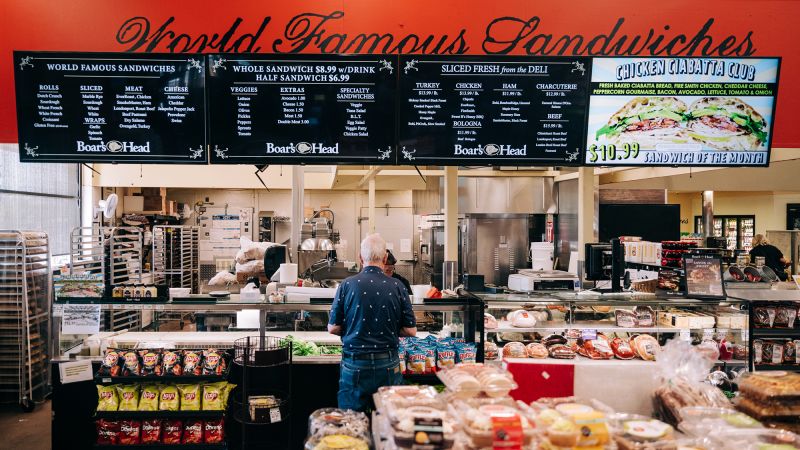
Until last year, Janet Albrecht could afford to eat roast beef sandwiches or tuna salad for lunch. But the widowed 78-year-old now has to skimp on her meals because her Social Security benefits haven’t kept up with the rising costs for food, housing and health care in recent years.
Until last year, Janet Albrecht could afford to eat roast beef sandwiches or tuna salad for lunch. But the widowed 78-year-old now has to skimp on her meals because her Social Security benefits haven’t kept up with the rising costs for food, housing and health care in recent years. A retired graphic designer, Albrecht estimates she’s paying $100 more a month at the supermarket than she was before inflation started skyrocketing in 2021. Her landlord increased the monthly rent by a total of $65 over the past two years, her utility bills are larger and some of the seven medications she takes daily after suffering a heart attack have gotten more expensive. She hasn’t had a haircut in more than a year, though she doesn’t like to wear her hair so long. “I’m down to eating ramen for lunch, which I never ate in my life until recently,” said Albrecht, an Indiana, Pennsylvania, resident, who relies primarily on $1,163 in monthly Social Security payments. “If it’s not marked down, I just don’t eat it. I haven’t eaten beef since I don’t know when. I can’t afford it.” Many other senior citizens are also feeling the inflation squeeze. Social Security benefits have lost 20% of their buying power since 2010, according to a recent analysis by The Senior Citizens League, an advocacy group. Those who retired that year would need a boost of $370 a month, or $4,440 a year, on average, to regain the lost value. Put another way, every $100 a household spent in 2010 would only purchase $80 today. Every January, Social Security recipients get an annual cost-of-living adjustment, known as a COLA, but the increases often don’t keep up with the actual rise in prices – hurting senior citizens, many of whom live on fixed incomes and depend heavily on their Social Security benefits. Eight of the last 15 adjustments have come in lower than inflation for that year.


Federal prosecutors have charged top executives at the subprime auto lender Tricolor with conspiring to defraud lenders and investors of the now-bankrupt company.

Warner Bros. Discovery has officially rejected Paramount’s hostile takeover bid, advising its shareholders to do the same. But the battle is far from over. Let’s break down what just happened and what to expect next.

California is threatening to ban sales of Tesla cars in the state for 30 days after a regulator said the term “Autopilot” for its driver assist feature constitutes false advertising.

Warner Bros. Discovery is officially rejecting Paramount’s buyout offer, calling it “illusory” and arguing that the existing plan to sell most of the media company to Netflix is a better deal for shareholders.

Tech historians may look back on 2025 as a kind of trough in consumer robotics.

The One Big Beautiful Bill Act, which was signed into law in July, created several new tax provisions and made changes to others that are in effect for this year. So it’s worth having the rundown of some of the key ones before preparing your 2025 tax return.

President Donald Trump promised voters in 2024 that if they returned him to the White House, his policies would deliver a blue-collar jobs boom.

Up until this year, it was unheard of for a sitting American president to sue a news outlet. In just a few months, President Donald Trump has managed to make it seem normal.

Plans to ban the sale of new combustion engine cars in the European Union by 2035 have been thrown into turmoil after pressure from car manufacturers.

Merriam-Webster is the latest in a string of dictionaries to choose words of the year based on our relationship with technology and artificial intelligence.

Economists are expecting to learn on Tuesday that the US labor market slowed last month, adding just 40,000 jobs.

It’s getting harder to escape AI slop. But a growing backlash could put a premium on “human-made” content.

The November jobs report is landing at an odd time – on a Tuesday in mid-December, instead of (what’s usually) the first Friday of the month – due to the lingering impact of the historically long government shutdown.