‘I don’t know how I will eat.’ For the workers behind Argentina’s national drink, Milei’s reforms are turning sour
CNN
Sonia Lemos doesn’t know how she will put food on the table until the next harvest, two months from now.
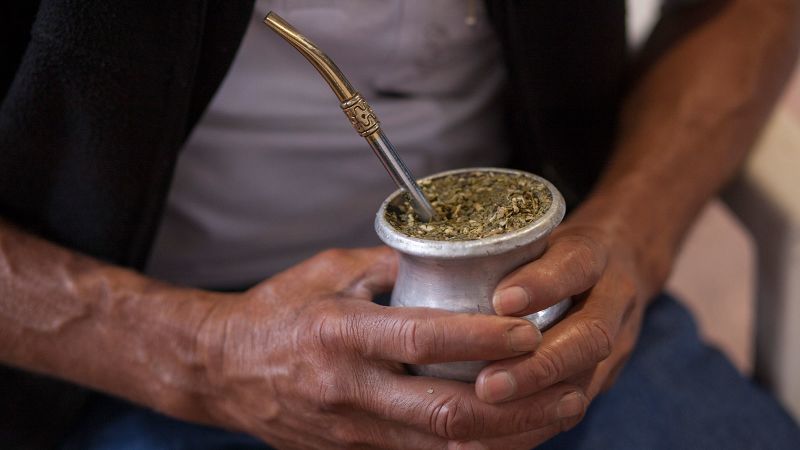
Sonia Lemos doesn’t know how she will put food on the table until the next harvest, two months from now. Lemos, 42, is a seasonal worker from northern Argentina. Six months a year, she harvests yerba, the leaves of a native South American shrub that are the basis of Argentina’s national beverage, mate. Few other drinks permeate the Argentinian way of life as does mate, an infusion of dry yerba leaves that is meant to be drunk slowly and, most importantly, shared with friends or relatives. When Argentina’s national team traveled to the 2022 football World Cup in Qatar, The New York Times reported that they carried with them over 1,100 pounds of mate for the month-long tournament. Both a social activity and a caffeine-fix, mate dates back to pre-Columbian times, when the leaves were hand-picked in the same manner as Lemos has been doing for the past 30 years. “When I was a child, we were poor. My mom and dad were also farmworkers and I left school at 12 and joined them,” she told CNN, a common story in Misiones, where the vast majority of mate production takes place and one of Argentina’s poorest provinces. It is hard work, but Lemos paints a positive picture of it. While her family has never grown rich, she dreamt of sending her four children to school to find a better life.


The Justice Department’s mortgage fraud investigation into New York Attorney General Letitia James is on life support after a grand jury, for the second time, rejected an indictment that would have revived charges against her.

A little-known civil rights office in the Department of Education that helps resolve complaints from students across the country about discrimination and accommodating disabilities has been gutted by the Trump administration and is now facing a ballooning backlog, a workforce that’s in flux and an unclear mandate.

The Indiana state Senate’s rejection of President Donald Trump’s redistricting push is one of the most significant GOP rebukes of Trump to date, and at a particularly inauspicious time for him.

President Donald Trump announced Thursday he is granting Tina Peters a full federal pardon, which is likely to increase the pressure campaign to free the former Colorado clerk from state prison even though he cannot erase her state charges.

Jean Leising spoke at a breakfast this fall at her 8th grade grandson’s school. Hours later, when she was set to give him a ride home from basketball practice, he bashfully told her that his entire team had received text messages about her that day — “and they were all bad.”

The US says it is sanctioning three nephews of Venezuelan President Nicolás Maduro, among others, as it ramps up its pressure campaign on the South American country.

The Indiana Senate on Thursday voted down a plan to redraw the state’s congressional districts to produce two more GOP-friendly seats, rejecting President Donald Trump’s months-long campaign to pressure the Republican supermajority in the deep-red state to bend to his will.

White House officials abruptly postponed the final meeting of a Trump-created task force charged with shaping the future of the Federal Emergency Management Agency, roughly two hours before it was set to begin on Thursday, according to three sources familiar with the decision.

Tyler Robinson, the 22-year-old man accused of fatally shooting conservative political activist Charlie Kirk, appeared in a Utah court Thursday for the first time in-person since his arrest.

The US Navy has submitted its recommendations on potential punishments for Democratic Sen. Mark Kelly over his participation in a video that reminded US troops they have a duty to refuse illegal orders, a Pentagon official told CNN on Thursday.

A grand jury, for a second time, declined to bring a new indictment against Letitia James, the New York attorney general who defeated President Donald Trump and his company in court, according to multiple sources.

More than 1.4 million Sao Paulo residents had no electricity on Thursday after strong winds caused several trees to collapse onto the Brazilian metropolis’ grid the day before. Local authorities said there were no injuries, but almost 400 flights were canceled.

A year after President Donald Trump’s election and with next year’s midterms looming, congressional deference to the White House is showing signs of wearing on some Republicans.