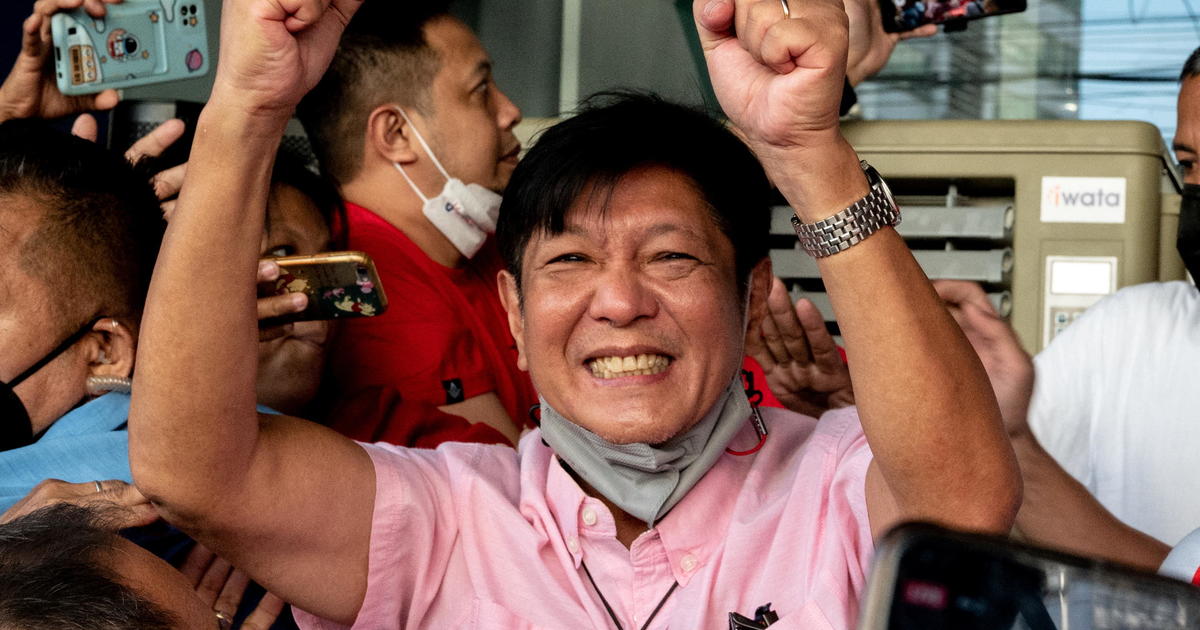
How will Ferdinand "Bongbong" Marcos Jr. taking power in the Philippines change U.S. relations?
CBSN
Manila — After winning an overwhelming mandate of more than 30 million votes in Monday's election, Ferdinand "Bongbong" Marcos Jr. is the de-facto president-elect of the Philippines. His victory marks his family's stunning return to power 36 years after they were forced into exile in the United States by a people-power revolution.
The U.S. was an ally to his father, the late dictator Ferdinand Marcos, for most of his two-decade rule, half of which the nation spent under brutal Martial Law. But Bongbong, the younger Marcos who's known almost ubiquitously by his childhood nickname, will take office facing a U.S. court's contempt order for violating a previous court order instructing him to pay human rights victims around $2 billion of the wealth his family plundered from their country.
Bongbong refused to answer questions about the contempt judgment handed down by a Hawaii court in 2011 throughout his campaign, and has continued to do so since clinching the presidency.
