How the US-Mexico border brought trouble to the Tohono O’odham Nation
CNN
The border has become impossible to ignore amid record numbers of migrants crossing into the US from Mexico and a bitter political storm over what to do with them.
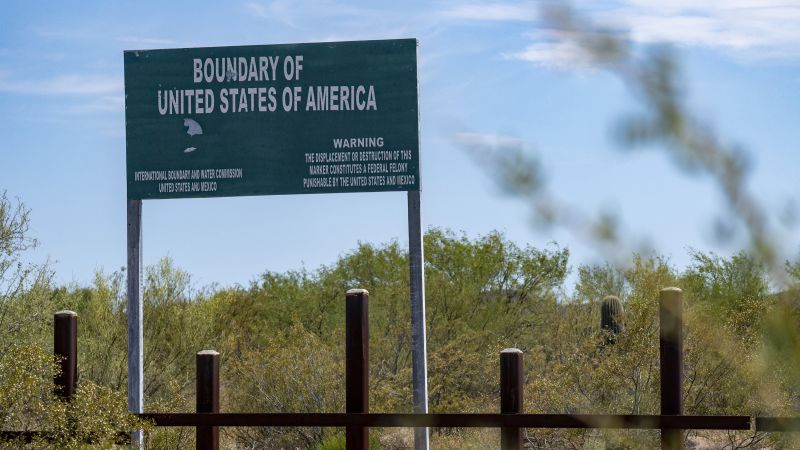
The thermometer hit 111 Fahrenheit as we rolled up to a battered tent deep in the Tohono O’odham Nation reservation in Arizona. Under its shade lay around a dozen dazed looking families, many with small children. A stressed-looking mother of two paced back and forth. They had walked for five hours to get here, and had been waiting all day. But they looked at us – and the tribal dignitaries on whose land they were trespassing – with only mild curiosity. They were asylum seekers, looking for the green uniforms of US Border Patrol so that they could turn themselves in. Chairman Verlon Jose, leader of the Tohono O’odham Nation, considered addressing them, and then turned away. “This is nothing that the nation can solve,” he said. “Whatever I say to them is not even going to be relevant, other than our prayers for their journey.” The Tohono O’odham, or “people of the desert,” have lived in the Sonoran desert for thousands of years, their ancestral homelands stretching from what is now Pima County, Arizona, all the way to Mexico’s Sea of Cortez. The US-Mexico border now slices across those lands, a 62-mile line of low metal fencing weaves between ancient saguaro cacti and that marks the southern limit of the Nation’s federal Indian reservation – and the edge of the United States. The Tohono O’odham do not recognize this border; enrolled members speak their own language, live on both sides and travel back and forth. But it has become impossible to ignore amid record numbers of migrants crossing into the US from Mexico and a bitter political storm over what to do with them.


Congressional Republicans have sent lawmakers home for the holidays without voting to address the Obamacare subsidies cliff that will hit millions of Americans on New Year’s Day — infuriating some of their own rank and file.

A jury found a Wisconsin judge – accused of helping an undocumented immigrant dodge federal authorities – guilty of obstruction Thursday, marking a victory for President Donald Trump as he continues his sweeping immigration crackdown across the country.

A number of Jeffrey Epstein survivors voiced their concern in a private meeting with female Democratic lawmakers earlier this week about the intermittent disclosure of Epstein-related documents and photos by Democrats on the House Oversight Committee, sharing that the selective publication of materials was distressing, four sources familiar with the call told CNN.

The US military conducted strikes against two alleged drug-trafficking boats in the eastern Pacific Ocean on Thursday, killing 5 people, according to US Southern Command.

Four-term North Carolina Democratic Gov. Jim Hunt, a towering figure in North Carolina politics in the late 20th century who helped leaders from both major parties strive for public education reform, died Thursday at the age of 88, his daughter Lt. Gov. Rachel Hunt announced.

President Donald Trump announced Thursday the White House will host the “Patriot Games,” a competition with young athletes from across the county, as part of the celebration of the United States’ 250th anniversary next year.

Susie Wiles’ recently published interviews in Vanity Fair are remarkable for a multitude of reasons. But perhaps leading that list was what the White House chief of staff said about Venezuela.

With under two weeks to go before he’s sworn in, New York City mayor-elect Zohran Mamdani has not announced many hires for his administration. One of the few that he has announced was forced to almost immediately resign Thursday after her past antisemitic tweets came to light.

The board of trustees of the John F. Kennedy Center for the Performing Arts voted Thursday to rename the facility after both the former president and President Donald Trump.

Peruvian scientist Rosa Vásquez Espinoza joins forces with indigenous communities to protect a disappearing species that is crucial to the health of the rainforest.

Frustration is mounting inside the Justice Department as it races to redact thousands of pages of files related to Jeffrey Epstein before they must be released Friday, multiple sources familiar with the process told CNN.

The GOP-controlled House passed a bill that would block Medicaid funds from being used for gender identity care to minors.

The one-time bonuses President Donald Trump said Wednesday will be paid out to over a million US service members will be pulled from funds already approved by Congress to cover housing and other household costs for troops as part of a military stipend program.