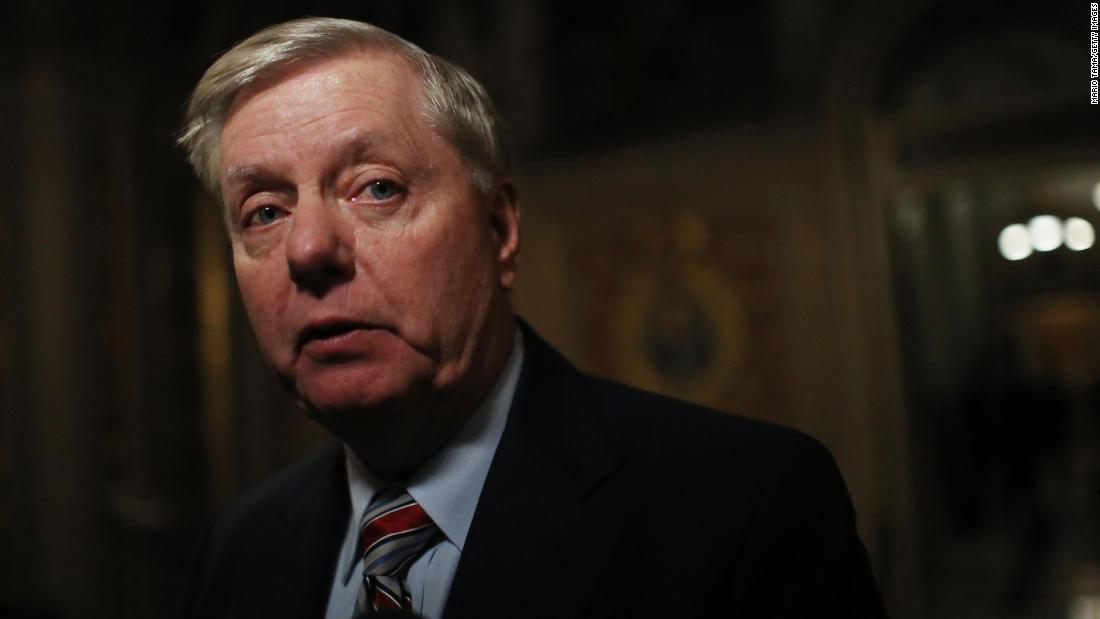
Graham denies systemic racism exists in US and says 'America's not a racist country'
CNN
Republican Sen. Lindsey Graham denied on Sunday that there is systemic racism in the US, claiming "America's not a racist country" as President Joe Biden and others urge people to directly confront the issue as the nation grapples with a spate of police killings of Black Americans.
Citing the elections of former President Barack Obama, who is African American, and Vice President Kamala Harris, who is both Black and South Asian, Graham told Fox News that "our systems are not racist. America's not a racist country," adding: "Within every society you have bad actors." The comments from the South Carolina Republican come several days after a jury convicted former Minneapolis police officer Derek Chauvin on all charges in the death of George Floyd, a Black man whose killing last year sparked a racial reckoning in the US and abroad and led to calls for police reform as more Black Americans die during encounters with law enforcement officers.

Top lawmakers who were briefed last week on the September “double-tap” strike on an alleged drug boat in the Caribbean say they would support the release of video from the attack, with Democrats actively calling for it to be made public.

In most ways, New Orleans and Minneapolis couldn’t be more different.

In 2016, as then-presidential candidate Donald Trump vowed that US troops would carry out even his most extreme battlefield orders as commander in chief — some of which former military leaders said would be illegal — Pete Hegseth warned that service members had a duty to refuse unlawful orders from a potential President Trump.

The Supreme Court on Monday will grapple with President Donald Trump’s power to capture control of independent agencies in an important case that could reshape large swaths of the federal government and unwind a precedent that has been on the books since Franklin D. Roosevelt was in the White House.

President Donald Trump took center stage at the Kennedy Center for the Performing Arts on Sunday evening to pay tribute to the newest class of honorees, a group of performers and entertainers whose combined work spans music, stage and film.

GOP Rep. Marjorie Taylor Greene stood defiant in her first interview since announcing her resignation from Congress, making clear she’s not afraid to speak out on the issues that made President Donald Trump “furious” with her, including her support for releasing all files related to accused sex trafficker Jeffrey Epstein.

In a wide-ranging interview with CNN’s Manu Raju for “Inside Politics Sunday,” Fitzpatrick leaned into areas where he broke sharply with his party’s leaders, including his desire to find a healthcare compromise, staunch commitment to defending Ukraine and past votes against advancing major pieces of President Donald Trump’s agenda.

Survivors of the 1941 Japanese bombing of Pearl Harbor have long been the center of a remembrance ceremony held each year on the military base’s waterfront.

When President Donald Trump has been asked about the reason he’s pressuring President Nicolás Maduro to step down and threatening military action, he consistently blames the leader of Venezuela for two things: drugs and migrants.

Jasmine Crockett has two cashier’s checks made out to use on Monday: one to submit if she files for reelection for her US House seat, the other to jump into the already competitive Texas Democratic primary for US Senate.

A federal judge on Saturday temporarily locked down the Justice Department’s access to some evidence used in its criminal case against former FBI Director James Comey, just as the Trump administration prepares to seek a new indictment after the dismissal of previous charges early last week.

One person was seriously injured after being stabbed Friday on Charlotte’s LYNX Blue Line, the same route where the fatal stabbing of a Ukrainian refugee took place months earlier.

Maduro has survived predictions and ridicule, but along the way, Venezuela lost millions of inhabitants, 72% of its economy, democratic legitimacy in the eyes of much of the world, and many of its most important international allies.