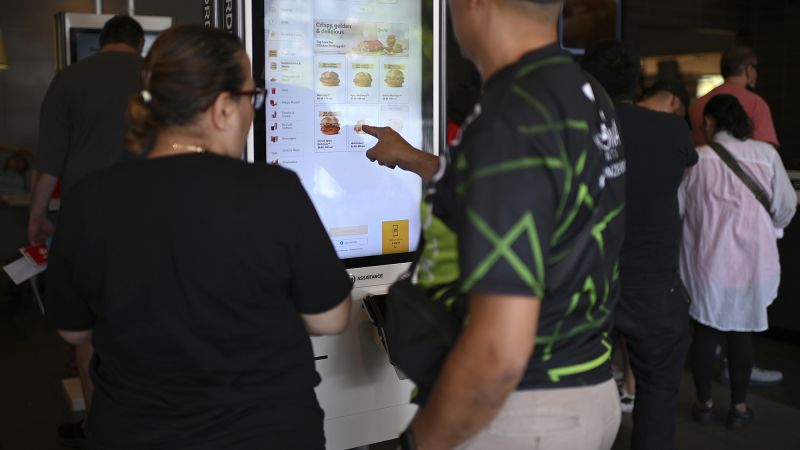
Customers didn’t stop spending. Companies stopped serving
CNN
When Wall Street traders decide they’ve maxed out the value they can get from a particular sector of the market — tech, say — they’ll often cash out and move their profits into another area. It’s called a sector rotation, and it happens all the time as part of the natural course of a business cycle.
When Wall Street traders decide they’ve maxed out the value they can get from a particular sector of the market — tech, say — they’ll often cash out and move their profits into another area. It’s called a sector rotation, and it happens all the time as part of the natural course of a business cycle. When consumers decide they’ve maxed out the value they can get from the things they typically buy, business leaders tend to view it with alarm — a sign that folks don’t have the money to spend and therefore a recession must be on the horizon. But what if those consumers are just behaving like traders, and finding value elsewhere? On earnings calls in recent weeks, executives have bemoaned the customer “pullback.” McDonald’s and Starbucks sales declined, so there must be some serious belt-tightening going on. On top of that, fewer people are booking Airbnbs, and families are skipping trips to Disneyland. The horror! Everybody sell, we must be barreling toward an economic cliff! Of course, that’s not what’s actually happening.


Tech historians may look back on 2025 as a kind of trough in consumer robotics.

The One Big Beautiful Bill Act, which was signed into law in July, created several new tax provisions and made changes to others that are in effect for this year. So it’s worth having the rundown of some of the key ones before preparing your 2025 tax return.

President Donald Trump promised voters in 2024 that if they returned him to the White House, his policies would deliver a blue-collar jobs boom.

Up until this year, it was unheard of for a sitting American president to sue a news outlet. In just a few months, President Donald Trump has managed to make it seem normal.

Plans to ban the sale of new combustion engine cars in the European Union by 2035 have been thrown into turmoil after pressure from car manufacturers.

Merriam-Webster is the latest in a string of dictionaries to choose words of the year based on our relationship with technology and artificial intelligence.

Economists are expecting to learn on Tuesday that the US labor market slowed last month, adding just 40,000 jobs.

It’s getting harder to escape AI slop. But a growing backlash could put a premium on “human-made” content.

The November jobs report is landing at an odd time – on a Tuesday in mid-December, instead of (what’s usually) the first Friday of the month – due to the lingering impact of the historically long government shutdown.

President Donald Trump sued the BBC on Monday for defamation over edited clips of a speech that made it appear he directed supporters to storm the US Capitol, opening an international front in his fight against media coverage he deems untrue or unfair.

Ford on Monday said it is pulling back on its electric vehicle plans, a move that will result in a $19.5 billion charge against its earnings to be taken mostly in the current quarter.

The US government is launching an early career hiring and talent development program to bring more technology and artificial intelligence employees to the public sector, as part of the Trump administration’s efforts to modernize government systems and stay ahead in the global tech race.

The November jobs report is landing at an odd time – on a Tuesday in mid-December, instead of the first Friday of the month – due to the lingering impact of the historically long government shutdown.