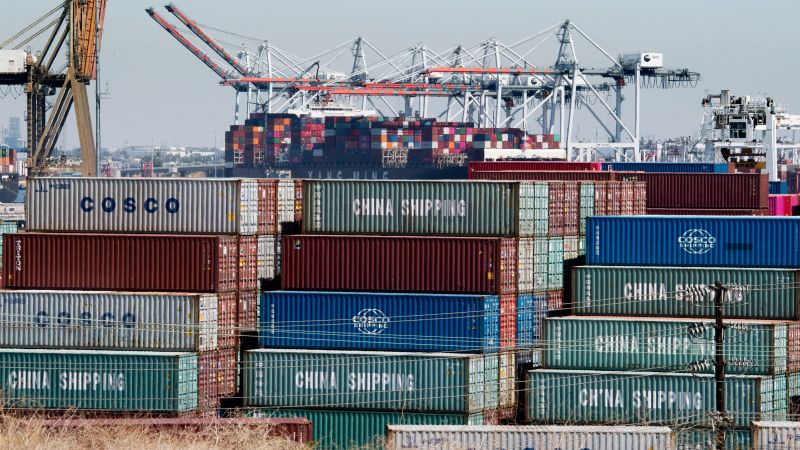
Both Biden and Trump want higher tariffs. Here’s what voters need to know
CNN
No matter who wins the presidential election in November, American businesses can expect to pay more to import certain foreign-made goods.
No matter who wins the presidential election in November, American businesses can expect to pay more to import certain foreign-made goods. Former President Donald Trump, who has referred to himself as a “Tariff Man,” has called for increasing tariffs on all imports. Meanwhile, President Joe Biden – who has kept most of Trump’s tariffs in place for the past three-plus years – said Tuesday that his administration will increase tariffs on some Chinese-produced goods, including electric vehicles, semiconductors and steel. The two presidential candidates are usually far apart on the issues, but a protectionist trade policy is where they find common ground. Tariffs can be politically popular, even though many economists agree they are costly tools that don’t always boost domestic industries as promised. Still, there are major differences to note between Trump’s call for sweeping tariffs and Biden’s more targeted approach. Here’s what voters should know: Starting in 2018, Trump imposed new tariffs of up to 25% on foreign-made washing machines, solar panels, steel and aluminum, as well as many Chinese-made goods, including baseball hats, luggage, bicycles, TVs and sneakers.


Venezuelan President Nicolás Maduro said Wednesday that his US counterpart Donald Trump had revealed his true motives toward the South American country with his claim that that it had stolen US “oil, land and other assets.”

Ghislaine Maxwell, the former girlfriend of Jeffrey Epstein, is making another effort at overturning her conviction for child sex trafficking and other crimes, with new court filings Wednesday claiming evidence has emerged showing that she did not receive a fair trial.

The US government now admits failures by the pilots of an Army Black Hawk helicopter and a controller in Reagan National Airport tower during the January 29 midair collision over the Potomac River that killed 67 people.

Affordable Care Act coverage will get a lot more expensive in 2026 if Congress doesn’t extend the enhanced premium subsides that are set to expire at year’s end.

A retired Tennessee law enforcement officer was held in jail for more than a month this fall after police arrested him because of a Facebook post of a meme related to the September assassination of conservative activist Charlie Kirk.

On Sunday morning, as investigators rushed to prepare a search warrant for a hotel room in Coventry, Rhode Island, FBI Director Kash Patel broke the news on social media celebrating that a person of interest had been detained in the Brown University mass shooting.

The White House has installed plaques along President Donald Trump’s “Presidential Walk of Fame,” offering descriptions of his predecessors, often written in the style of his social media posts — including insults, baseless claims and random capitalization.

A defiant Fulton County District Attorney Fani Willis is testifying before an investigative Georgia Senate Committee on Wednesday. The committee scrutinized her prosecution of President Donald Trump and multiple codefendants, at one point cutting Willis’ microphone briefly when she testified beyond the question she was asked.

Rep. Sarah McBride on Wednesday criticized congressional Republicans as being “obsessed with trans people” ahead of a vote on bills that would restrict youth access to gender identity care and penalize health workers who provide it.

Venezuelan opposition leader and Nobel Peace Prize winner María Corina Machado has left Oslo, her coordinator of international relations, Pedro Urruchurtu Noselli, wrote in a post on X.

The Senate passed the annual defense policy bill, sending it to President Donald Trump’s desk for his signature.

A new trailer previewing Melania Trump’s eponymous documentary offers more questions than answers about the relationship between President Donald Trump and the first lady.

Authorities hunting for the perpetrator of the deadly mass shooting at Brown University released a new enhanced photo yesterday. Follow for live updates