Biden's economic plan bets on blue collars, from infrastructure to child care
CNN
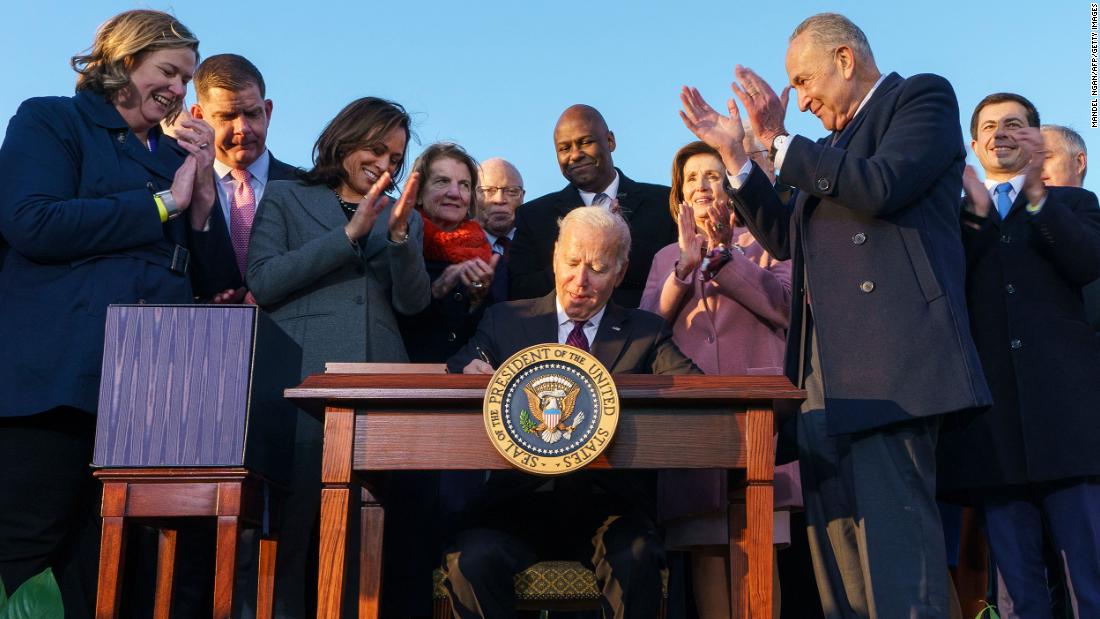
The bipartisan infrastructure bill that President Joe Biden signed into law Monday marks a milestone in his effort to reorient Democratic economic policy away from the strategy of his party's past two presidents.
The sweeping infrastructure plan -- which funds some $550 billion in new spending on roads, bridges, ports, water systems, mass transit and electric vehicle charging stations -- encapsulates Biden's focus on creating and enhancing jobs that do not require a college education. That same emphasis is evident in the broader Build Back Better plan still awaiting congressional approval, which would channel huge sums into the "caregiving economy" of child care, early childhood education and elder care, which are now predominantly low-wage industries staffed heavily by women of color.
Economists have estimated that at least four-fifths of the jobs created by the infrastructure bill and the broader economic plan would not require college degrees, a dynamic that Biden unfailingly highlights when he discusses them.


Some Medicare enrollees may soon be able to access super-popular drugs for obesity under a voluntary model program, the Centers for Medicare and Medicaid Services announced Tuesday. Eligible beneficiaries will only have to pay $50 a month.

The Justice Department’s leadership asked career prosecutors in Florida Tuesday to volunteer over the “next several days” to help to redact the Epstein files, in the latest internal Trump administrationpush toward releasing the hundreds of thousands of photos, internal memos and other evidence around the late convicted sex offender Jeffrey Epstein.

The US State Department on Tuesday imposed visa sanctions on a former top European Union official and employees of organizations that combat disinformation for alleged censorship – sharply ratcheting up the Trump administration’s fight against European regulations that have impacted digital platforms, far-right politicians and Trump allies, including Elon Musk.

A Delaware state trooper was killed along with the suspected gunman Tuesday during a shooting at a motor vehicle agency near Wilmington, authorities said.

Wyoming’s lone U.S. representative is running for the U.S. Senate seat being vacated by Cynthia Lummis, who isn’t seeking re-election.

A new lawsuit filed in Washington, DC’s federal court Monday challenges the Kennedy Center board of trustees’ move to add President Donald Trump’s name to the cultural institution.

Warning: This post contains language readers may find disturbing.

Some staff at the Department of Veterans Affairs are finding little to be merry about after the agency said it would eliminate tens of thousands of open, unfilled positions across the country as it looks to streamline its staffing.

Former Republican Sen. Ben Sasse announced Tuesday that he’s been diagnosed with “metastasized, stage 4 pancreatic cancer, and am gonna die.”

CNN’s 5 Things AM brings you the news you need to know every morning.

Political opposites are closing 2025 as they did 2024: on each side of America’s Donald Trump divide. But CNN’s “All Over the Map” survey did provide several interesting takeaways. Some may be instructive about the midterm election climate, at least at this beginning stage.

A 2-year-old child is among at least five people who were killed when a Mexican Navy plane carrying medical patients crashed into the waters of Galveston Bay in Texas on Monday afternoon, US Coast Guard officials say.

The Trump administration is suing the local government of Washington, DC, over its gun laws, alleging that restrictions on certain semiautomatic weapons run afoul of Second Amendment rights.